


My Shrimp Lo Mein Noodles recipe brings the authentic flavors of classic Chinese takeout right into your kitchen with minimal effort. This dish features tender noodles, juicy shrimp, and crisp vegetables tossed in a perfectly balanced savory sauce that rivals your favorite restaurant. Skip the heavy oils and delivery fees because this healthy stir-fry comes together in under 30 minutes flat. You’ll master a restaurant-quality wok technique that makes every bite taste incredible and leaves you feeling satisfied without the greasy aftertaste.
Why You'll Love This Recipe
- Ready faster than delivery—on the table in 30 minutes with minimal cleanup
- Fresh crisp veggies beat soggy takeout every single time
- The savory sauce coats every noodle without weighing it down
- Customize it with whatever vegetables you have on hand
- Leftovers taste amazing for lunch the next day
- I make this when I want that comforting takeout experience without leaving the house or wait…
Ingredients You’ll Need
- Dry lo mein noodles or spaghetti: Provides the essential chewy texture for the dish
- Fresh large shrimp: Offers sweet, tender bites that cook quickly
- Vegetable oil: High smoke point perfect for high-heat stir-frying
- Fresh garlic: Aromatics that build the foundation of the savory flavor profile
- Fresh ginger: Adds warm, zesty notes that pair perfectly with seafood
- Yellow onion: Provides sweetness and depth when cooked in the wok
- Red bell pepper: Adds bright color and a satisfying crisp crunch
- Broccoli florets: Nutrient-dense vegetable that holds its texture well
- Green onions: Offer fresh sharpness and vibrant color for the finish
- Soy sauce: The salty umami base of the authentic stir-fry sauce
- Oyster sauce: Thick, rich flavor that adds complexity and depth
- Sesame oil: Finishing oil that delivers essential nutty aromatics
- Sugar: Balances the saltiness of the soy sauce perfectly
- Water: Thins the sauce just enough to coat the noodles evenly
- White pepper: Delivers a subtle heat distinct from black pepper
- Fresh cilantro: Bright, herbaceous garnish for a fresh finish
- Chili oil: Optional heat boost for spice lovers
- Sesame seeds: Toasted crunch for texture and visual appeal
How to Make It
Boil the Noodles:
Bring a large pot of water to a rolling boil over high heat. Add your dry lo mein noodles and cook them for 4-5 minutes, or just until tender (al dente). Immediately drain the noodles and rinse them under cold water to stop the cooking process, then toss with a teaspoon of oil to prevent sticking while you prep the rest.
Mix the Sauce:
In a small bowl, whisk together the soy sauce, oyster sauce, sesame oil, sugar, water, and white pepper. Stir vigorously until the sugar dissolves completely. Set this bowl aside near your stove—you’ll need it ready to go once the stir-fry begins.
Prep and Season the Shrimp:
Pat the large shrimp completely dry with paper towels; moisture is the enemy of a good sear. Season them lightly with a pinch of salt and white pepper. This ensures they absorb flavor without becoming overly salty later.
Sear the Shrimp:
Heat one tablespoon of vegetable oil in a large wok or heavy skillet over high heat until it just starts to shimmer. Add the shrimp in a single layer, being careful not to crowd the pan—cook in batches if necessary. Cook for 1-2 minutes per side until pink and opaque, then immediately transfer them to a clean plate to prevent overcooking.
Stir-Fry the Vegetables:
Add the remaining tablespoon of oil to the hot wok. Toss in the sliced yellow onion and broccoli florets, stir-frying for 2 minutes. You want the onions to soften slightly but retain a bit of bite, and for the broccoli to start turning bright green.
Add Peppers and Aromatics:
Add the julienned red bell pepper and the white parts of the green onions to the wok. Stir-fry for another 1-2 minutes until all the vegetables are crisp-tender. Push the vegetables to the side of the wok to clear a spot in the center.
Bloom the Garlic and Ginger:
Add the minced garlic and ginger to the center of the wok. Stir constantly for 30 seconds until very fragrant, being extremely careful not to burn them. This quick bloom unlocks their essential oils without turning bitter.
Combine Noodles and Sauce:
Add the cooked noodles to the wok along with the reserved sauce. Using tongs or chopsticks, toss everything together vigorously for 1-2 minutes to coat the noodles evenly and heat them through.
Finish with Shrimp and Scallions:
Return the cooked shrimp to the wok and add the green parts of the green onions. Toss gently for another 30-60 seconds just to combine everything and reheat the shrimp. Remove from heat immediately and adjust seasoning if needed.
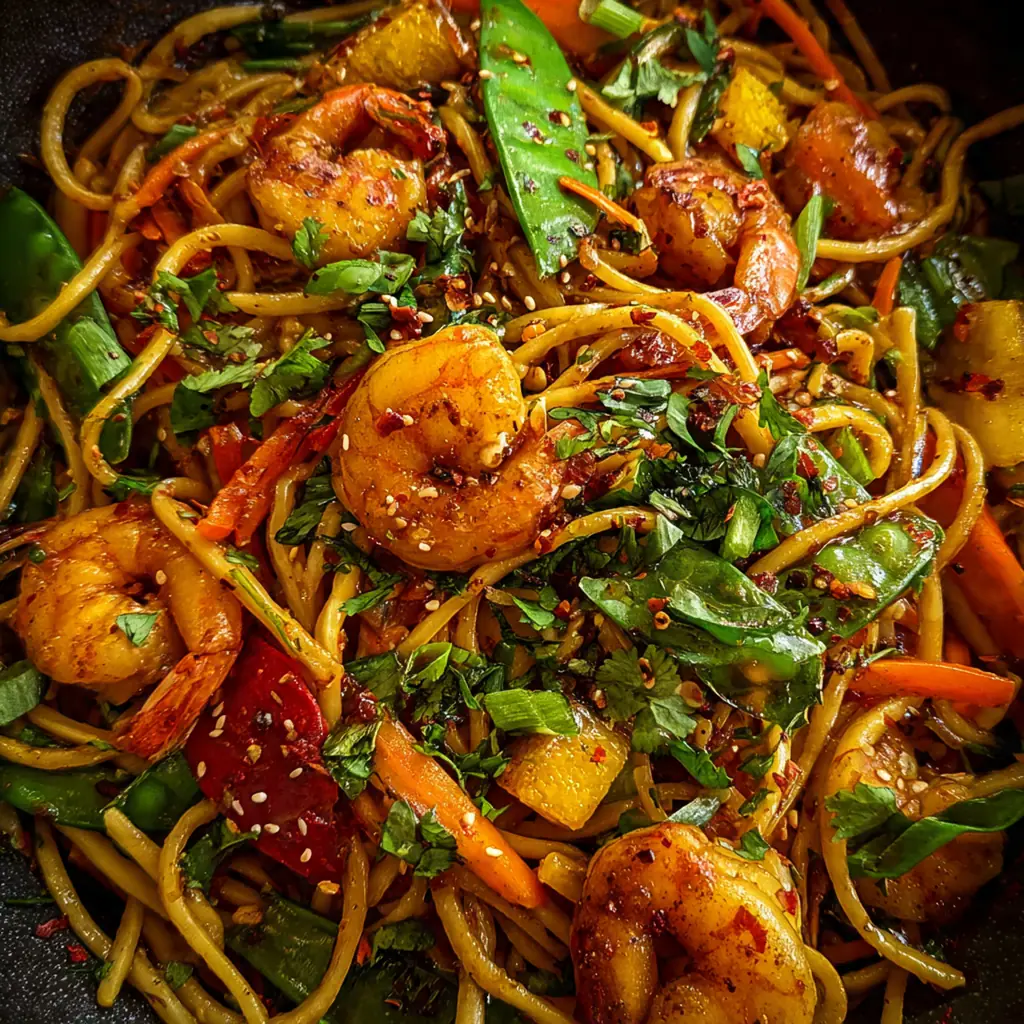
You Must Know
- Undercook the noodles slightly since they keep cooking in the hot wok
- Have every ingredient prepped and ready before turning on the burner
- High heat is non-negotiable for that authentic ‘wok hei’ breath of the wok flavor
- Trust me, the sear on the shrimp makes the dish—don’t overcrowd the pan.
Storage Tips
Store any leftover Shrimp Lo Mein Noodles in an airtight container in the refrigerator for up to 3 days. I recommend reheating in a skillet over medium-high heat with a splash of water to loosen the noodles and prevent them from drying out. Avoid the microwave if possible, as it tends to make the shrimp rubbery and the vegetables soggy. The wok method keeps the texture much closer to that fresh-cooked quality you love.
Ingredient Substitutions
If you can’t find dry lo mein noodles, regular spaghetti or linguine works perfectly fine—it’s all about that chewy texture. For a gluten-free version, use rice noodles and swap the soy sauce for tamari. If you don’t have fresh ginger, powdered ginger works in a pinch, though use about half the amount as it’s more concentrated. Cherry tomatoes can stand in for red bell peppers if you need a quick swap, just add them at the very end to prevent mushiness.
Serving Suggestions
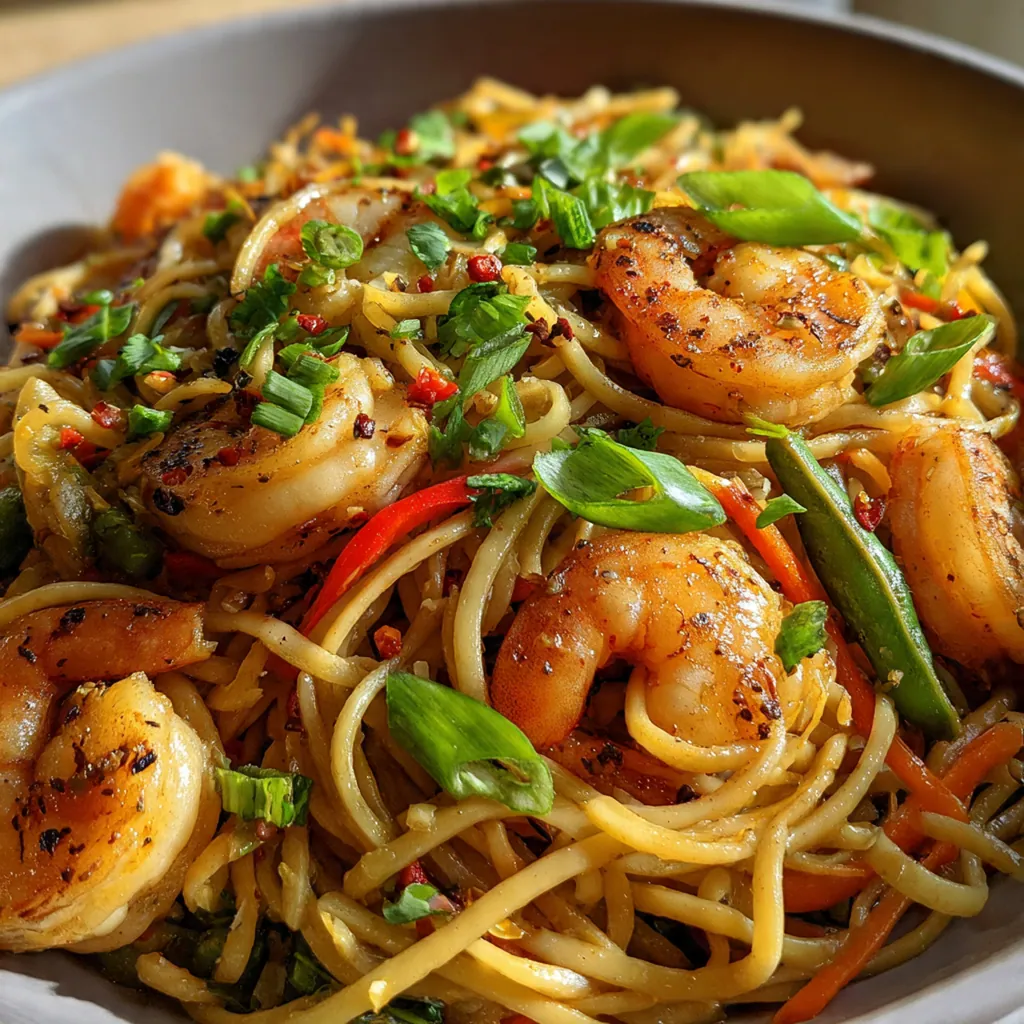
Serve your Shrimp Lo Mein Noodles immediately while everything is piping hot and crisp. I love adding extra chili oil or crushed red pepper flakes for those who like a serious kick of heat. For a complete Chinese-inspired meal, pair it with a side of steamed edamame, crispy egg rolls, or a simple cucumber salad dressed with rice vinegar. The contrast of cool, crunchy sides with the hot, savory noodles makes for a balanced dinner experience.
Cultural Context
Shrimp Lo Mein Noodles are a staple of Cantonese-American cuisine, designed to bring the bustling energy of a Hong Kong noodle shop into the home kitchen. Authentic lo mein relies on the technique of flash-frying ingredients in a blazing hot wok to create that signature smoky flavor known as ‘wok hei.’ While takeout versions often suffer from excessive oil and limp vegetables, this home-cooked method highlights the freshness of the ingredients and the precision of the wok. It bridges the gap between the quick convenience of American takeout and the refined simplicity of traditional Chinese cooking.
Pro Tips
- Rinse shrimp under cold water and pat completely dry for the best possible sear
- Don’t skip the sesame oil; it adds the essential nutty finish that makes the dish taste auth…
- Toss the noodles with just a teaspoon of oil to keep them from clumping while you work
- I always prep my veggies first—once that oil is hot, the cooking goes lightning fast.
Frequently Asked Questions
Yes! This Shrimp Lo Mein Noodles recipe works perfectly with spaghetti as a substitute. Use dried spaghetti and cook it until just al dente. The texture and sauce absorption are very similar, making it a great pantry swap.
To ensure tender shrimp, cook them quickly over high heat for 1-2 minutes per side until just pink and opaque. Add them back to the wok at the very end to warm through, preventing overcooking and keeping them juicy.
Absolutely! This Shrimp Lo Mein Noodles recipe is versatile. You can use snap peas, carrots, mushrooms, or baby corn. Just ensure all vegetables are cut uniformly and cooked until crisp-tender to maintain the right texture.
Reheat leftovers in a wok or large skillet over medium heat with a splash of water or soy sauce. This revives the noodles and prevents them from drying out. Microwave reheating can make the noodles soggy.
This dish is a complete meal on its own, but for an authentic Chinese restaurant experience, serve it with egg drop soup, spring rolls, or a side of steamed broccoli. It pairs well with a light beer or jasmine tea.