


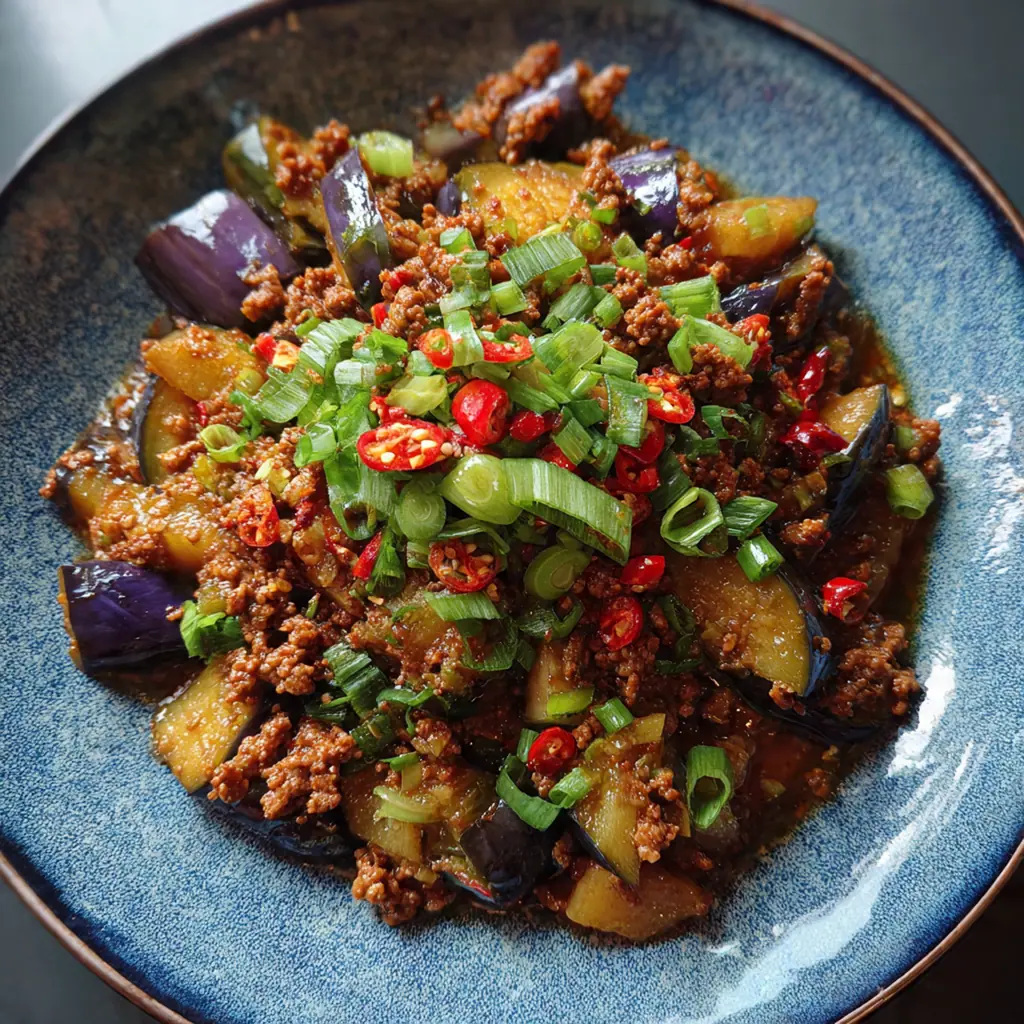
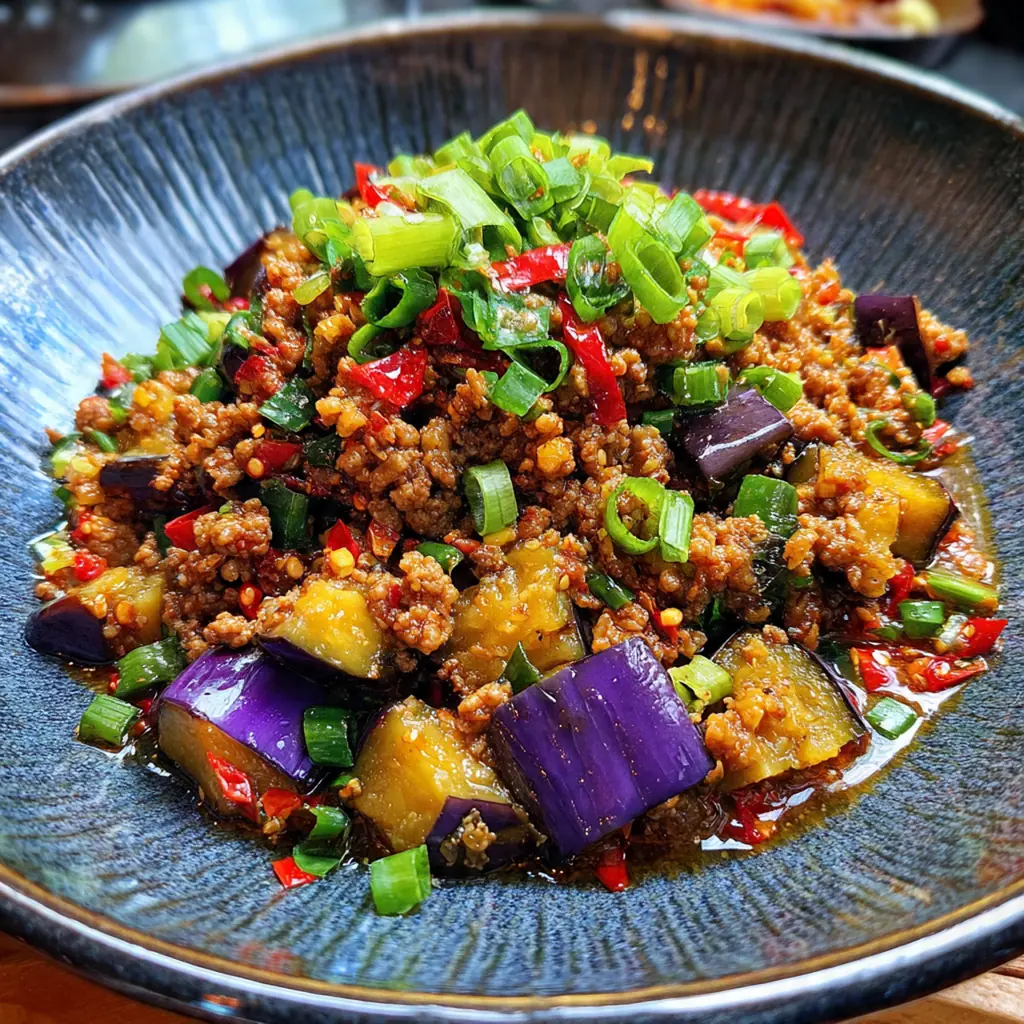
This Spicy Sichuan Eggplant Mince is the kind of fiery, soul-warming stir-fry I crave on busy weeknights. It captures the bold and addictive spirit of Sichuan cooking with tender eggplant and savory pork in a deeply aromatic sauce. What I love most is how a few pantry staples transform into a restaurant-quality meal right on your stovetop. That signature ma la flavor, the tingle of Sichuan peppercorns mixed with chili heat, is pure comfort food that feels exciting every single time.
Why You'll Love This Recipe
- It delivers that authentic, numbing Sichuan restaurant experience at home
- The eggplant gets perfectly tender without turning soggy or oily
- You can have it on the table in just over 30 minutes
- Leftovers taste even better the next day as the flavors settle in
- It’s become my go-to dish for impressing dinner guests
Ingredients You’ll Need
- Chinese or Japanese eggplant: their slender shape and thin skin mean they cook quickly and soak up sauce beautifully look for firm, shiny eggplants without blemishes for the best texture
- Salt: a crucial step for drawing out excess moisture from the eggplant which prevents it from becoming greasy and helps it fry up perfectly
- Vegetable oil: a neutral oil with a high smoke point is ideal for stir-frying at the high heat needed to get that signature wok aroma
- Ground pork: it provides a rich, savory base that clings to the eggplant you can use a slightly fattier blend for more flavor or leaner if you prefer
- Sichuan peppercorns: the star of the show that gives the dish its characteristic citrusy aroma and that unique numbing sensation always buy them whole and lightly crush them yourself for maximum punch
- Dried red chilies: they infuse the oil with a deep, smoky heat rather than just raw spiciness adjust the number based on your personal heat tolerance
- Garlic and fresh ginger: the aromatic foundation that builds the flavor base mince them finely so they cook quickly and distribute evenly throughout the dish
- Sichuan chili bean paste: this fermented paste is the non-negotiable soul of the sauce look for a deep red, oily version from Pixian for the most authentic taste
- Light soy sauce: it adds the necessary saltiness and that classic umami depth without darkening the color of the dish too much
- Chinkiang vinegar: its malty, slightly sweet black vinegar adds a crucial balancing acidity right at the end regular rice vinegar can work in a pinch
- Granulated sugar: just a touch to round out the sharp edges of the chili and vinegar and create a more complex, well-rounded sauce
- Scallions: their fresh, sharp bite is the perfect bright finish sprinkled over the rich cooked dish
- Toasted sesame oil: a final drizzle adds a nutty, fragrant aroma that ties all the other flavors together always use the toasted variety for its stronger scent
- Fresh cilantro and toasted sesame seeds: optional garnishes that add a pop of color and extra layers of texture and freshness
How to Make It
Salt and Dry the Eggplant:
Toss your eggplant batons with salt in a colander and let them sit for about ten minutes. This pulls out the bitter juices and extra water, which is the secret to getting eggplant that fries up tender instead of soggy. Pat them thoroughly dry with paper towels afterward – you’ll be amazed at how much less oil they absorb.
Stir-Fry the Eggplant:
Heat most of your oil in a wok or large skillet until it shimmers. Add the dried eggplant and stir-fry it over medium-high heat until it’s tender and has some golden edges. Don’t rush this step; letting the eggplant properly cook here gives it great texture. Scoop it onto a plate and set it aside for now.
Brown the Pork Mince:
Add the last bit of oil to the same wok and toss in the ground pork. Use your spatula to break it up into small crumbles as it cooks. You’re looking for it to lose its pink color and get a little crispy in spots, which builds a deeper savory flavor.
Toast the Aromatics:
Push the pork to one side to create a little empty space in the hot oil. Drop in your crushed Sichuan peppercorns and dried chilies. Let them sizzle for just about thirty seconds until they smell incredibly fragrant – this unlocks their oils. Then stir them into the pork so every bit gets coated.
Build the Sauce Base:
Add the minced garlic, ginger, and that all-important chili bean paste right into the wok with the pork. Keep stirring everything for a minute or two. You’ll see the paste darken and the oil turn a rich red color, which means the flavors are fully blooming.
Combine and Simmer:
Now return the cooked eggplant back to the wok and give it a good stir to marry it with the pork and spices. Pour in your soy sauce, vinegar, and sugar. If the mixture looks a bit dry at this point, just add a small splash of water to loosen it up.
Finish with Final Touches:
Reduce the heat and let everything simmer together gently for a couple of minutes. This is when the magic happens and the eggplant soaks up all that incredible sauce. Turn off the heat, drizzle the sesame oil over the top, and sprinkle on your chopped scallions.
Garnish and Serve:
Give your Spicy Sichuan Eggplant Mince one final stir to incorporate the scallions and sesame oil. Transfer it to a serving dish and scatter on some fresh cilantro and sesame seeds if you’re using them. It’s absolutely best served immediately, piping hot over a big bowl of steamed rice.
You Must Know
- Salting the eggplant is non-negotiable for perfect texture
- Doubanjiang is the soul of the dish – find the good stuff
- Toast the Sichuan peppercorns to wake up their aroma
- I always make a double batch for lunches
Storage Tips
Any leftovers of this Spicy Sichuan Eggplant Mince keep wonderfully in the fridge for up to three days. Just make sure to store them in an airtight container once they’ve cooled to room temperature. When you’re ready to eat, reheat it gently in a skillet over medium heat with a tiny splash of water to refresh the sauce. I don’t recommend freezing it, as the eggplant’s texture tends to become a bit mushy and watery after thawing, but trust me, the fridge leftovers rarely last that long anyway.
Ingredient Substitutions
If you can’t find the long Chinese or Japanese eggplants, regular globe eggplant will work in a pinch – just cut it into similar-sized batons and be extra diligent with the salting step. For the protein, ground chicken, turkey, or even crumbled firm tofu are fantastic swaps for the pork. In a real pinch for the Sichuan peppercorns, a tiny bit of fresh black pepper and a strip of lemon zest can hint at the citrusy note, but it won’t be the same. If Chinkiang vinegar eludes you, a mix of half rice vinegar and half balsamic can approximate its malty sweetness. For a gluten-free version, simply swap the light soy sauce for tamari.
Serving Suggestions
A big, fluffy mound of steamed jasmine rice is the absolute classic and necessary partner for this dish – it soaks up the glorious sauce and tames the heat perfectly. For a simple, crunchy side, I love a quick smashed cucumber salad with garlic and vinegar or some stir-fried bok choy with garlic. If you want to make a fuller spread, some cold sesame noodles or steamed pork dumplings from the freezer make the whole meal feel like a festive Sichuan feast without much extra work.
Cultural Context
This dish, known as *yuxiang qiezi* or ‘fish-fragrant eggplant’ in Sichuan, is a brilliant example of the region’s famous ‘fish-fragrant’ flavor profile – a savory, spicy, sweet, and sour sauce that traditionally accompanied fish but now stars in many vegetable dishes. That iconic *ma la* sensation, the numbing-tingle from Sichuan peppercorns combined with chili heat, is the heart of the cuisine and what makes it so addictive. It’s a staple in home kitchens and humble restaurants across Chengdu, a comforting yet vibrant dish that proves how a few potent ingredients can create something truly extraordinary. Making it at home connects you directly to that rich culinary tradition.
Pro Tips
- Pat the eggplant completely dry after salting
- Toast the chilies and peppercorns in the oil first
- Use a well-seasoned wok for the best sear
- I always have a jar of doubanjiang in my fridge
Frequently Asked Questions
Chinese or Japanese eggplants are ideal for Spicy Sichuan Eggplant Mince because they have fewer seeds and a tender texture that absorbs the sauce well without getting mushy. If using globe eggplant, salting and draining it first helps reduce bitterness.
Yes, the flavors in this Spicy Sichuan Eggplant Mince often deepen when made ahead. Reheat it gently on the stove with a splash of water or broth to loosen the sauce. It stores well in the fridge for up to 3 days.
For Spicy Sichuan Eggplant Mince, if you can’t find doubanjiang, a mix of gochujang (Korean chili paste) and a little fermented black bean paste is the closest substitute. Alternatively, use a generic chili garlic sauce and add a pinch of sugar for balance.
Your Spicy Sichuan Eggplant Mince is ready when the eggplant batons are tender and the pork is cooked through. The sauce should have thickened slightly and coated all the ingredients, which takes about 15-20 minutes of simmering after the initial stir-fry.
Serve this Spicy Sichuan Eggplant Mince over steamed jasmine rice to soak up the incredible sauce. For a complete Sichuan meal, pair it with a simple cucumber salad and stir-fried greens to balance the heat.