

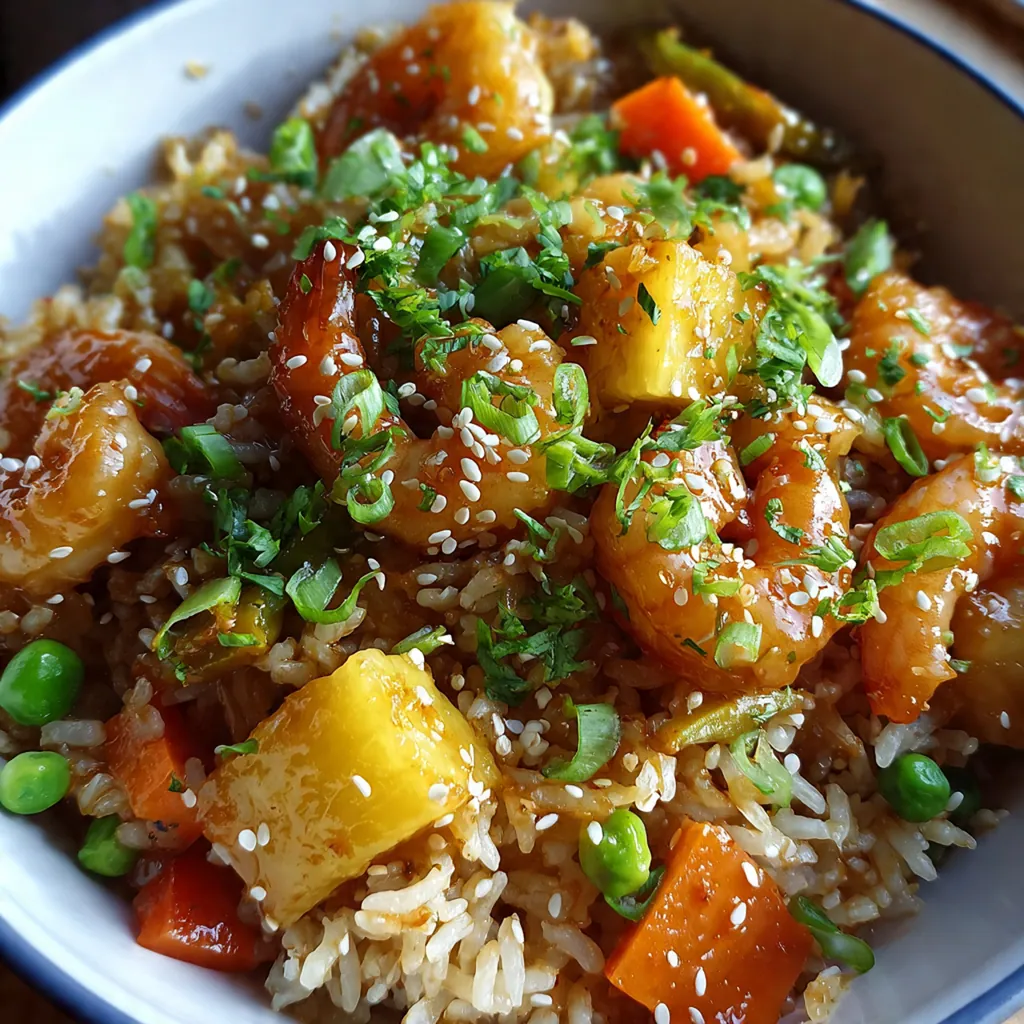
Teriyaki Shrimp Pineapple Rice is my favorite weeknight rescue, blending Japanese teriyaki tradition with Hawaiian pineapple sweetness in one pan. This fusion dish comes together so quickly you’ll have it on the table before takeout could arrive. I first enjoyed it at a casual spot in Maui, and now I recreate that tropical escape at home regularly. The juicy shrimp, fluffy rice, and caramelized pineapple coated in a savory-sweet glaze make every bite a mini vacation. It’s the perfect balance of tangy, salty, and sweet that feels both comforting and exciting.
Why You'll Love This Recipe
- Dinner is ready in just 35 minutes from start to finish
- One skillet means you’ll have almost no dishes to wash afterward
- The sweet pineapple and savory teriyaki create a crowd-pleasing flavor balance
- You can easily swap in different vegetables or proteins based on what you have
- It’s my most requested meal when friends come over
Ingredients You’ll Need
- Shrimp: Use large shrimp for meaty, tender bites that cook quickly, and always pat them dry so they sear beautifully instead of steaming.
- Vegetable oil: A neutral oil with a high smoke point is ideal for stir-frying without burning the aromatics or sauce.
- Soy sauce: This forms the salty, umami backbone of your teriyaki glaze; low-sodium lets you control the salt level if you prefer.
- Mirin: Sweet Japanese rice wine adds depth and a glossy sheen to the sauce, balancing the soy perfectly.
- Sake: Dry sake or sherry gives the teriyaki subtle complexity and helps tenderize the shrimp as it cooks.
- Brown sugar: Just enough to caramelize and sweeten the sauce without making it cloying, creating that sticky glaze you love.
- Garlic: Fresh minced garlic infuses the oil and sauce with a pungent aroma that’s essential for authentic flavor.
- Ginger: Grated fresh ginger brings a bright, spicy kick that cuts through the richness and wakes up the whole dish.
- White rice: Day-old rice fries up beautifully without turning mushy, giving each grain a chance to soak up the sauce.
- Pineapple: Fresh pineapple chunks caramelize slightly in the hot pan, adding tropical sweetness and a touch of balancing acidity.
- Red bell pepper: Diced pepper adds crunch, vibrant color, and a mild sweetness that complements the pineapple perfectly.
- Frozen peas and carrots: A convenient mix that thaws quickly, adding pops of color and vegetable goodness without extra prep work.
- Green onions: Sliced scallions add a fresh, oniony bite and vibrant green garnish that makes the dish look professionally finished.
- Sesame seeds: A sprinkle of toasted sesame seeds gives a nutty crunch and authentic Asian flair to each serving.
- Sesame oil: A drizzle at the end adds a rich, toasty aroma that elevates the entire dish with just a few drops.
How to Make It
Make the Teriyaki Sauce:
Whisk together the soy sauce, mirin, sake, brown sugar, garlic, and ginger in a small bowl until the sugar dissolves. Setting this aside now lets the flavors meld and ensures your sauce is ready when you need it. I always give it a quick taste to see if I want it a touch sweeter.
Cook the Shrimp:
Pat your shrimp completely dry with paper towels—this step is crucial for getting a nice sear. Heat one tablespoon of oil in a large skillet or wok over medium-high heat until it shimmers. Add the shrimp in a single layer and cook for two to three minutes per side until they turn pink and opaque. Remove them to a plate immediately so they don’t overcook while you prepare the rest.
Sauté the Bell Pepper:
Add the remaining tablespoon of oil to the same hot skillet. Toss in the diced red bell pepper and cook for two to three minutes, stirring occasionally. You want it to just start softening but still retain a pleasant crunch. This step builds layers of flavor using the fond left from the shrimp.
Add Pineapple and Veggies:
Stir in the diced pineapple and the thawed peas and carrots. Cook for another two to three minutes until everything is heated through and the pineapple edges get slightly caramelized. The natural sugars in the pineapple will start to brown and smell absolutely incredible, telling you it’s time for the next step.
Incorporate the Rice:
Push the vegetable mixture to the sides of the skillet. Add your cooked rice to the center, breaking up any clumps with your spatula. Then stir everything together so the rice gets coated with the oils and starts to heat through. Using day-old rice here is the secret to preventing a gummy, sticky texture.
Pour and Simmer with Sauce:
Pour your prepared teriyaki sauce evenly over the rice and veggie mix. Stir well to coat every grain, and let it cook for three to four minutes. The sauce will bubble and reduce, soaking into the rice and creating a glossy glaze. You’ll know it’s ready when the rice is hot and most of the liquid is absorbed.
Return Shrimp and Heat Through:
Gently fold the cooked shrimp back into the skillet. Cook for just one to two more minutes until the shrimp are reheated and everything is piping hot. Be careful not to stir too vigorously so you don’t break the shrimp apart. This simply warms them through without making them tough or rubbery.
Finish and Garnish:
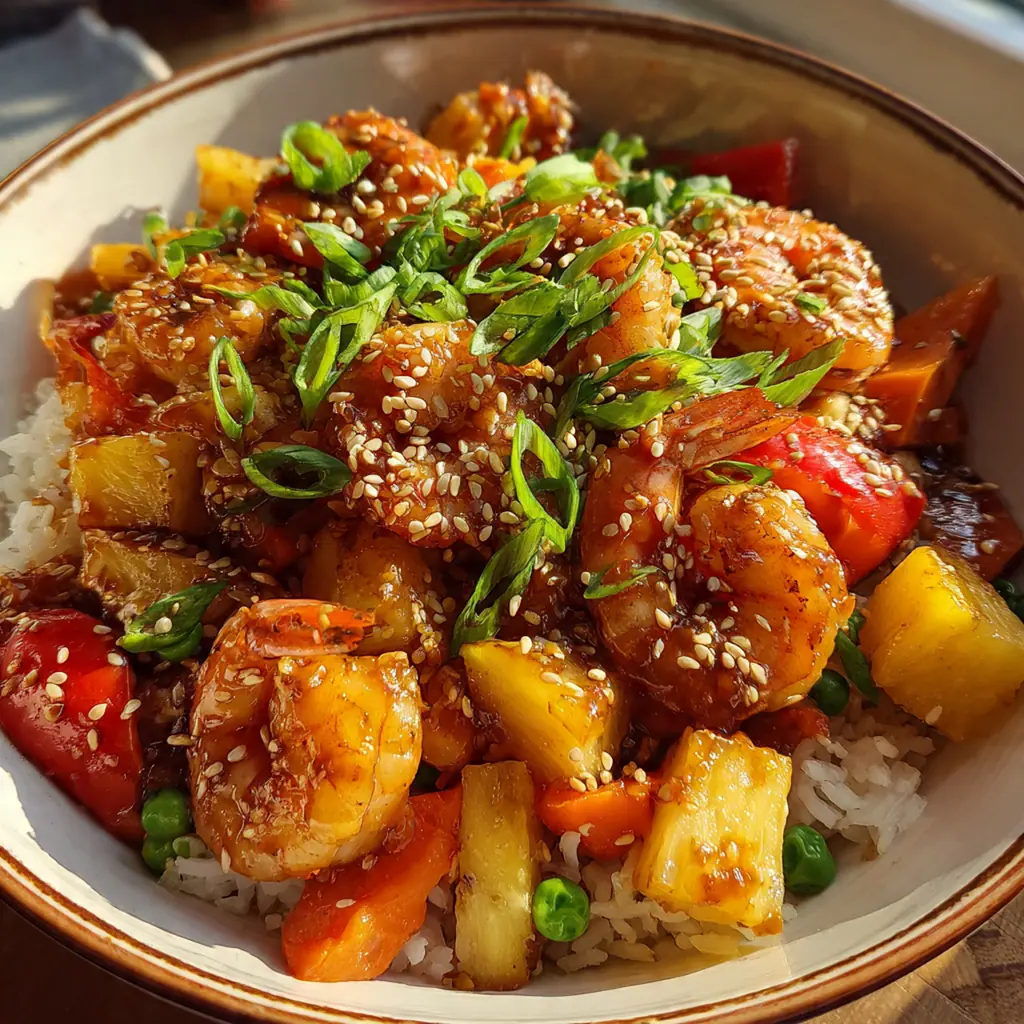
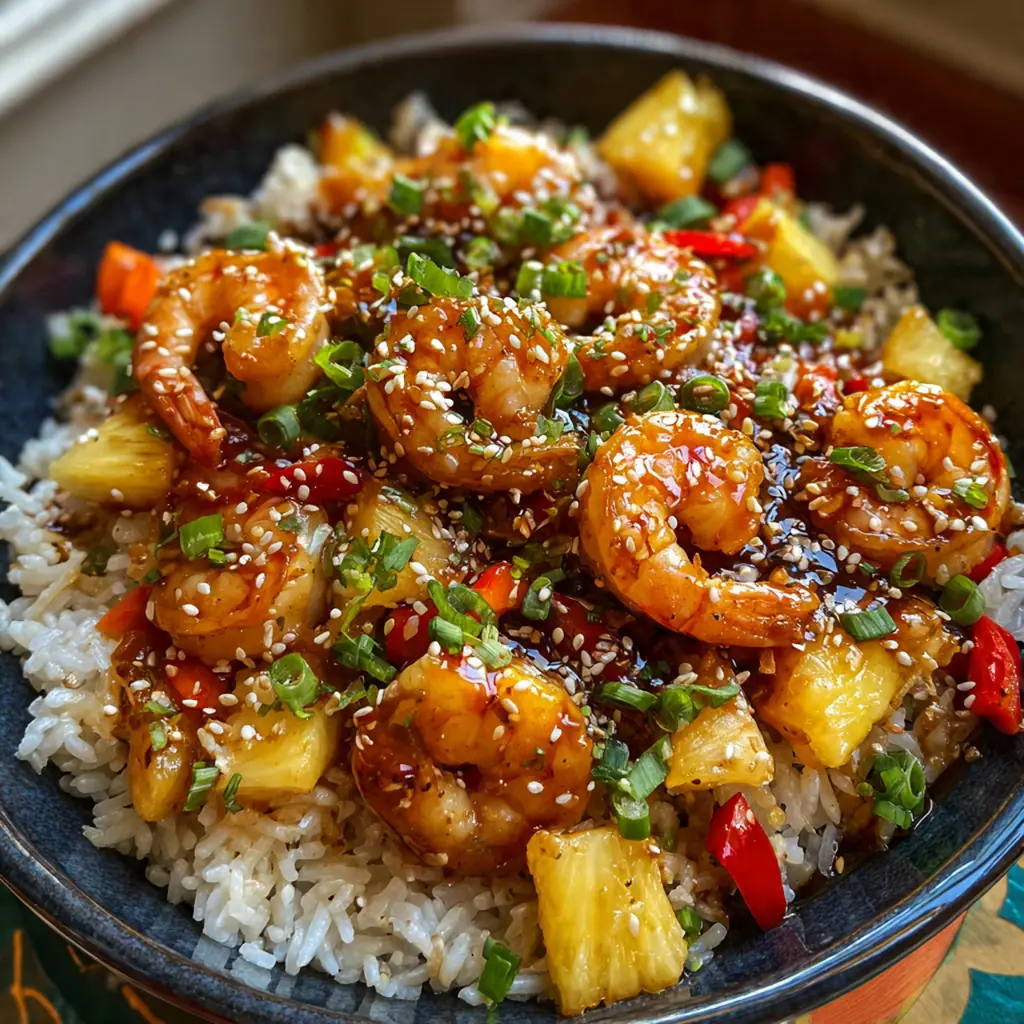
Remove the skillet from the heat. If you’re using sesame oil, drizzle it over the top for that final aromatic touch. Garnish with sliced green onions and a generous sprinkle of sesame seeds. Serve it immediately while it’s still sizzling hot for the best texture and flavor experience.
You Must Know
- Day-old rice is non-negotiable for the best fried rice texture
- Shrimp cook fast, so pull them off the heat as soon as they turn pink
- Drain canned pineapple thoroughly to avoid a watery skillet
- Get your pan good and hot before adding the shrimp for a proper sear
- I always make a little extra sauce because it’s so good
Storage Tips
Store any leftover Teriyaki Shrimp Pineapple Rice in an airtight container in the refrigerator, and it’ll stay fresh for up to three days. I prefer reheating it in a skillet over medium heat with a tiny splash of water or broth to revive the rice, stirring occasionally until it’s hot through. The microwave works in a pinch, but use 30-second bursts and stir between to avoid overheating the shrimp, which can make them a bit rubbery. This dish makes fantastic next-day lunches, though the pineapple will soften a touch more, but the flavors only deepen.
Ingredient Substitutions
If you need a gluten-free version, simply swap the soy sauce for tamari—it works perfectly. For a shellfish allergy, diced chicken breast or firm tofu cubes are excellent alternatives; just adjust cooking times accordingly. No mirin? Use a mix of rice vinegar and a pinch of sugar or a dash of honey. Dry sherry is a fine stand-in for sake, and if you’re out of fresh pineapple, well-drained canned chunks will do in a pinch. Feel free to toss in broccoli florets or snap peas instead of the peas and carrots based on what you have.
Serving Suggestions
I love serving this Teriyaki Shrimp Pineapple Rice with a side of steamed broccoli or a simple cucumber salad to add a fresh, crisp contrast. For a more complete meal, start with a small bowl of miso soup or a few crispy vegetable spring rolls on the side. It’s also fantastic topped with a fried egg for extra richness, or wrapped in butter lettuce leaves for a fun, low-carb hand-held option. The bright, tropical flavors pair beautifully with a cold glass of iced green tea or a light, crisp lager to round out the experience.
Cultural Context
Teriyaki Shrimp Pineapple Rice is a delicious emblem of Japanese-Hawaiian fusion, a cuisine born from the blending of Japanese immigrant food traditions with local Hawaiian ingredients and influences. In Hawaii, you’ll find plate lunches featuring teriyaki-glazed proteins alongside rice and macaroni salad, but the addition of sweet pineapple is a quintessential tropical twist that celebrates the islands. The teriyaki technique—originally involving grilling or broiling with a glossy soy-based glaze—is purely Japanese, while the casual stir-fry style and use of pineapple reflect Hawaii’s laid-back, multicultural food scene. This dish captures the spirit of aloha by combining savory umami with sunny, fruity sweetness, making it a beloved comfort food in homes and at beachside stands across the Pacific.
Pro Tips
- Let your skillet get properly hot before adding the shrimp for a good sear
- Mix a cornstarch slurry into the sauce if you prefer a thicker teriyaki glaze
- Use fresh ginger and garlic for the most vibrant, aromatic flavor possible
- I always keep a bag of frozen peas and carrots in the freezer just for this recipe
Frequently Asked Questions
Day-old, cooked white rice (like Jasmine or short-grain) is ideal as it’s drier and fries up perfectly without becoming mushy. If using fresh rice, spread it on a tray to cool and dry for 15-20 minutes before stir-frying for the best texture in your Teriyaki Shrimp Pineapple Rice.
Yes, you can! While it’s best fresh, you can store leftovers in an airtight container in the fridge for up to 2 days. Reheat gently in a skillet with a splash of water or broth to refresh the texture of the rice and shrimp.
Dry sherry is an excellent substitute for sake. If you prefer a non-alcoholic option, you can use an equal amount of chicken broth or water with a tiny squeeze of lemon juice to mimic the subtle acidity. The teriyaki sauce will still be delicious for your shrimp and pineapple rice.
The shrimp are ready when they turn pink and opaque, which takes about 2-3 minutes per side. The sauce should be bubbling and thick enough to coat the back of a spoon. The rice and vegetables are heated through and well-combined with the glossy teriyaki glaze.
This dish is a complete meal on its own! For a lighter touch, pair it with a simple cucumber salad or a side of steamed edamame. Its Japanese-Hawaiian fusion flavors also go great with a bowl of miso soup to start.